Learn how Compose enables RaaS providers to ship rollups that connect to every corner of Ethereum out of the box.
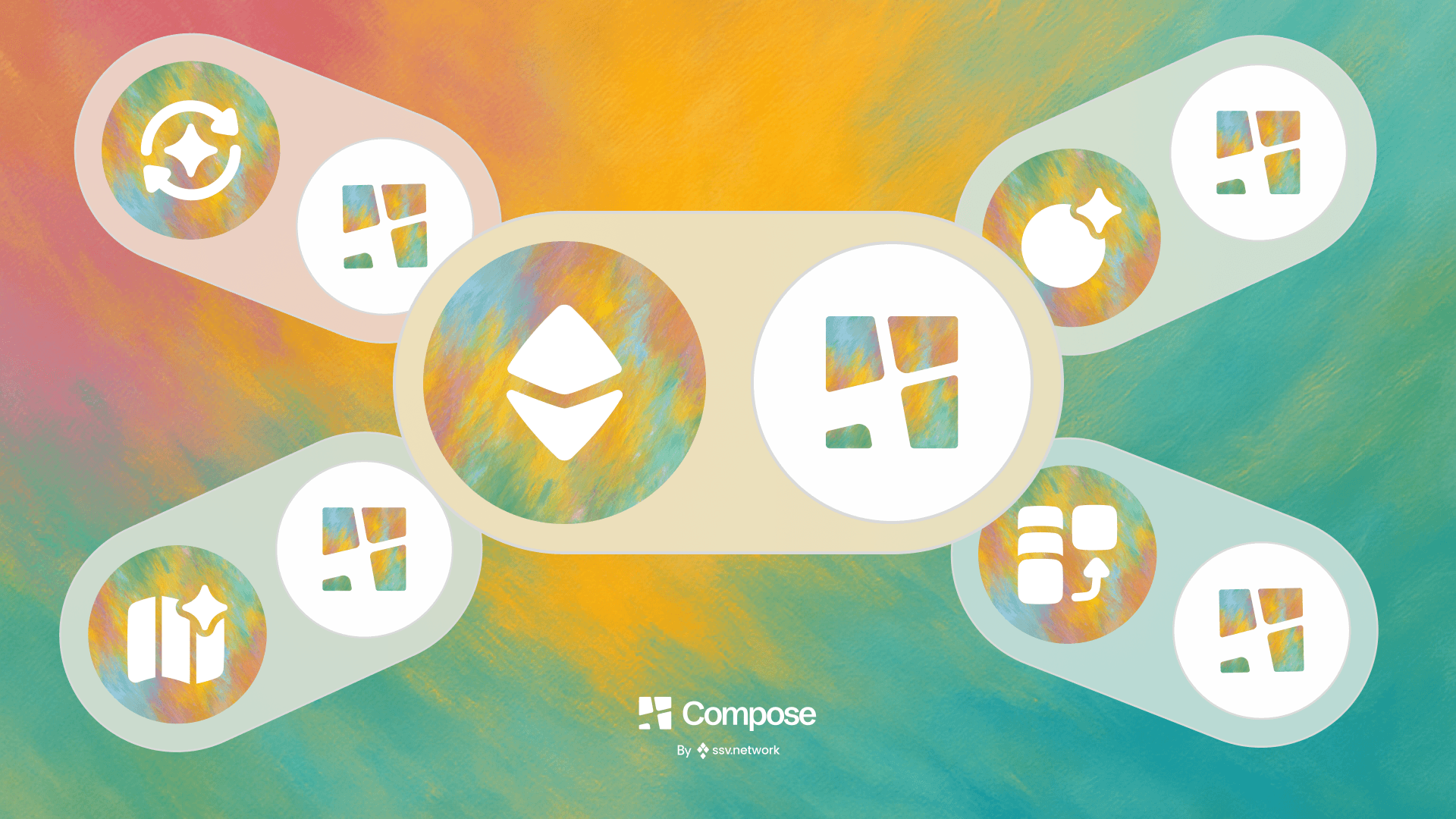
Compose lets Rollup as a Service (RaaS) providers ship rollups that are natively and atomically composable with the entire Ethereum rollup ecosystem from day one. Plug-and-play infrastructure that replaces bridge-heavy flows with a one-click cross-rollup UX, allowing RaaS clients to deploy once and compose everywhere to enjoy compounding network effects.
Composability out of the box
During the last year, the rollup space has shown no signs of slowing down. With over 100 rollups now live on Ethereum, the battle for liquidity, users, and attention is becoming fiercer by the day.
One of the biggest contributors to the proliferation of this space has been Rollup as a Service (RaaS), think Caldera, AltLayer, Conduit, and others. These providers have made it possible to spin up a rollup in just a few clicks, massively speeding up deployment and, therefore, the number of competitors.
But what if we could flip the script on this highly competitive landscape by choosing cooperation over competition? Compose is the driving force behind that shift.
Imagine that every rollup shipped from a RaaS provider is instantly composable with every other client who signs up for their service, out of the box. To take it even further, what if every client spinning up a rollup is atomically composable with every other rollup ecosystem in Ethereum (think Base, Arbitrum, OP, etc.)? This would be a massive unlock for RaaS providers, their clients, and especially for dApp developers building on those rollups.
Let’s unpack how Compose helps to achieve this.
Pain points RaaS providers and their clients know too well
Current interoperability solutions introduce friction and costs:
While RaaS providers are pushing toward better interoperability, rollup ecosystems still primarily rely on bridges, intents, or messaging for cross-chain operations. This makes UX feel clunky and introduces limitations and multivariate costs to route around fragmentation.
Stalled usage after launch:
RaaS makes deployment easy, but growth remains hard. For RaaS providers, fragmentation means that even if you launch 50 rollups, you’re essentially launching 50 isolated islands. Without native connectivity, each chain must bootstrap its own users and liquidity from scratch, a process that can take months or never reach self-sustaining velocity.
Redeployments to capture more value:
RaaS clients may deploy or redeploy on different stacks (e.g., OP Stack, Arbitrum Orbit, Polygon CDK, ZK Stack) to align with evolving strategy or tap into different ecosystems. This creates additional complexity and overhead for clients to route around framework lock-in.
Network effects are lost to fragmentation:
Even the best RaaS providers can’t sell network effects; they can only sell infrastructure. Each client’s ecosystem grows in isolation, making success difficult to compound. This is the anti-network effect of the current rollup era: the more chains you launch, the more liquidity and users are fragmented between them.
Plug into composability
One of the most promising developments that can address RaaS pain points is synchronous composability – a protocol-level approach that extends Ethereum’s atomic execution model across rollups.
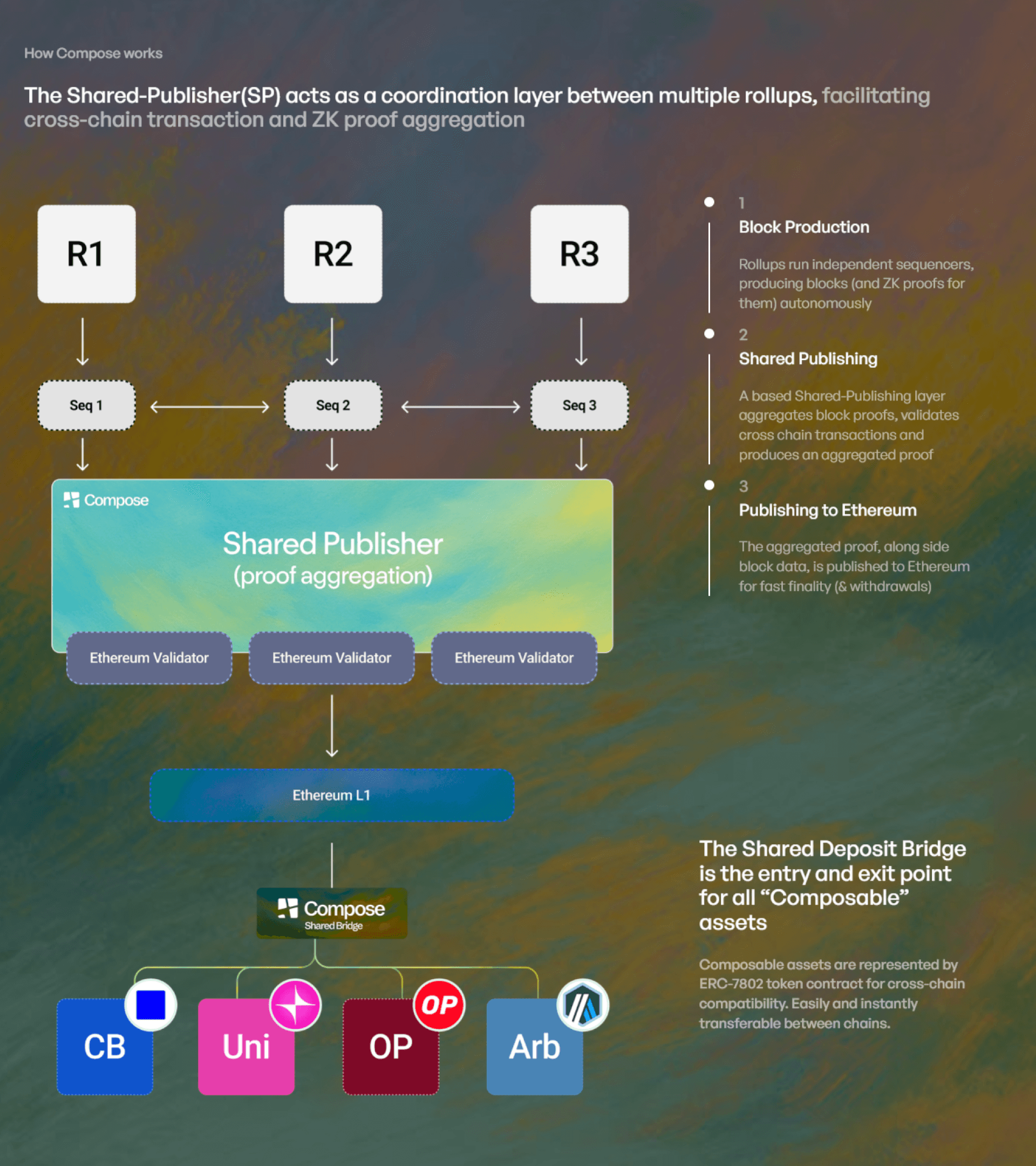
Compose introduces a Shared Publisher (SP) architecture that coordinates multiple rollup sequencers, enabling cross-chain transactions to be executed atomically within a single block, while preserving sequencer sovereignty. In essence, Compose acts as a layer that reconnects rollups to restore the seamless experience of Ethereum L1. Integrating Compose into a RaaS stack is a simple plug-and-play solution. By configuring RaaS stacks to communicate with the SP, each newly deployed rollup can be natively interoperable with the blue ocean of dApps and rollups in the Ethereum ecosystem.
No more friction and paying to route around fragmentation
Compose replaces bridge- and intent-heavy flows so that rollups execute cross-chain transactions synchronously and atomically in the same rollup block. Users don’t bounce through separate bridge UIs, pay extra solver/relayer fees, or wait on dispute periods. Instead, your clients get a “one-click” UX where assets stay native. By using ZK aggregation, costs are amortized across many cross-chain transactions, leading to cheaper transactions at scale. Additionally, each rollup maintains complete control over its sequencing mechanism, fee markets, and execution environment while participating in cross-rollup coordination.
Connect to every corner of Ethereum
By integrating Compose into your RaaS stack, every new rollup you launch is natively connected to an ecosystem of integrated rollups, rather than starting life as an isolated island that has to bootstrap liquidity and users from scratch. Apps on your chains can be called from other rollups in the network, enabling atomic cross-chain operations (e.g., borrow on one rollup, trade on another, and settle in one tx), which means usage and value can flow in from outside, not just from whoever you convince to bridge in on day one. That turns “we launched a chain, now what?” into “we launched a chain that’s instantly part of a larger demand network.”
Deploy once, compose everywhere
Compose sits beneath the choice of OP Stack vs Arbitrum Orbit vs Polygon CDK vs ZK Stack, so your clients no longer have to redeploy across multiple frameworks just to reach new ecosystems or users. Once the rollup is integrated, contracts can be called atomically from any other integrated rollup (or external rollup), giving a single deployment multi-ecosystem reach without the need for re-audits, duplicated infra, or migrations.
Build on the DeFi legos
Compose effectively converts your rollup from a set of isolated tenants into a true network: every new integrated rollup expands the network effect of cross-chain flows that all the others can plug into. A lending market on one client’s chain can now compose with a DEX on another client’s chain, and both can earn from interop flows instead of competing in parallel silos. This restores Ethereum-style “money lego” network effects at L2s, so you’re no longer just selling infrastructure capacity, you’re selling access and distribution to a growing ecosystem.
The new frontier of RaaS interoperability
Extend your RaaS from a deployment tool into a distribution network. Integrate Compose into your stack, and ship synchronous composable rollups to move from a walled gardens to open forests. Learn more on the Compose website or reach out on X.
Sign up for exciting updates from Compose